
A night guard and a TMJ splint look similar but aim at two different problems. Dr. Behrooz Khademazad, DDS holds a B.S. in Biochemistry and Texas License #15515. He has practiced at the same Grand Prairie location since August 28, 1988. His 37 years include continuing education in TMJ evaluation and therapy.
You wake with a sore jaw or a headache across your temples. Someone suggested an appliance, and the prices you found range enormously. Patients from Sheffield, Westchester and Trailwood arrive with exactly that question. Knowing the difference protects your money before you commit to TMJ treatment or wider general dentistry.
What Is the Difference Between a Night Guard and a TMJ Splint?
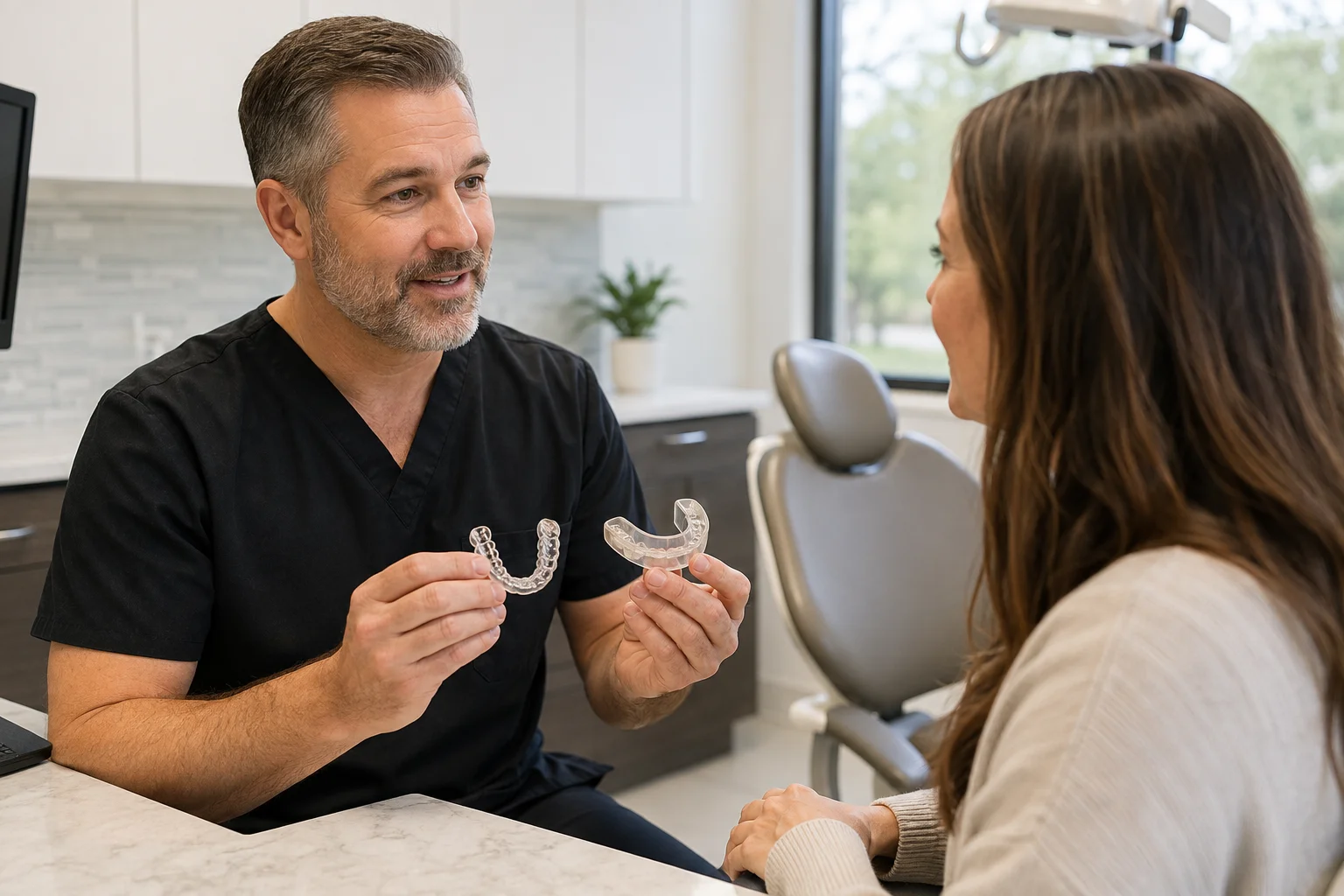
A night guard protects teeth from grinding damage, while a splint reduces load on the jaw joint. Patient advocacy guidance lists night guard, mouth guard and occlusal appliance as one device family. The label matters far less than what the appliance actually targets.
One aims at your teeth and the other aims at your joint. A night guard stops enamel wearing against enamel during sleep. A splint addresses the joint and the muscles surrounding it. Dr. Khademazad selects between them based on what is driving your symptoms.
Which Appliance Do You Actually Need?
Your symptoms alone cannot answer this, because the underlying causes vary so widely. The National Institute of Dental and Craniofacial Research describes TMD as more than 30 separate conditions. An appliance helping one condition can do nothing for another. Your evaluation looks for several specific findings.
- Wear patterns showing where your teeth grind
- Tenderness in the cheek and temple muscles
- Clicking, popping or limited jaw opening
- Uneven contact points across your bite
- Digital imaging when the findings call for it
The TMJ evaluation is typically included in a comprehensive dental examination. Nothing gets fabricated at that first visit, and no treatment is scheduled without discussion. You leave knowing what is driving your symptoms and where treatment starts. Treatment here always begins with the most conservative option addressing your identified cause.
Is a TMJ Splint Better Than a Night Guard?
More expensive does not automatically mean more effective for jaw pain. A published review of occlusal splints found no clear evidence they outperform physiotherapy in treating TMD. That review screened more than 11,000 papers before selecting 66 for analysis. Splints performed about as well as other conservative therapies.
Most pages on this topic claim the opposite without citing anything. Some clinics lead with their most expensive appliance as a matter of routine. Surgery and injections are never a starting point at this practice. They arise only after conservative treatment has failed a fair trial.
How Much Do Night Guards and TMJ Splints Cost in Grand Prairie TX?
A custom night guard runs $300 to $700 here depending on design and complexity. Bite adjustment runs $100 to $400 depending on how much correction is needed. Most dental plans cover night guards partially or fully when clinical findings support it. Here is how the common options compare on purpose and price.
| Option | Aimed At | Cost | How It Is Made |
| Custom night guard | Protecting teeth from grinding | $300 to $700 | Impression or scan, adjusted after wear |
| Occlusal splint | Reducing load on the jaw joint | Varies by design | Custom made, reviewed at follow-up |
| Bite adjustment | Correcting uneven contact points | $100 to $400 | Chairside, no appliance involved |
| Drugstore boil-and-bite | Basic tooth protection only | $20 to $40 | Self-moulded, never adjusted |
Benefits get verified before any appliance is fabricated for you. You always receive a complete written cost estimate before treatment begins. Five financing options and two membership plans appear on the financing page. Nobody thinks less of you for testing the drugstore version first.
Why Can a Night Guard Make TMJ Symptoms Worse?
A flat night guard protects enamel without stopping the muscles from clenching. Patient advocacy guidance notes a stabilization splint fails to prevent clenching. The lower teeth still contact its surface during sleep. Several warning signs deserve a return visit rather than persistence.
- Pain increasing instead of easing after two weeks
- New soreness appearing in a different area
- The appliance feeling loose or rocking overnight
- Teeth meeting differently after you remove it
- Any device problem worth reporting through FDA MedWatch
Your masseter and temporalis muscles keep working against a smooth surface. Grinding also wears down dental crowns and other restorations over time. Individual responses vary, and an appliance needing adjustment is common rather than alarming. Bring it back and have it checked instead of pushing through discomfort.
What Should You Try Before Any Appliance?
NIDCR guidance recommends simple steps first for a documented reason. It notes that jaw pain often does not signal a serious problem and settles without treatment. The same guidance warns against treatments causing permanent changes to teeth and bite. Those irreversible approaches do not work and can worsen the problem.
Soft foods, heat or cold, and gentle jaw stretching cost you almost nothing. Reducing clenching, gum chewing and nail biting helps many people meaningfully. A removable appliance stays reversible, because you can stop wearing it tomorrow. Most patients notice less morning soreness within two to four weeks of consistent wear.
Where Should You Start With Jaw Pain?
Dr. Behrooz Khademazad has evaluated jaw health at every examination since August 28, 1988. He holds a B.S. in Biochemistry, a DDS, and Texas License #15515. His continuing education covers TMJ evaluation and therapy across 37 years of practice. Families from Nottingham Estates, Lake Parks and Trailwood trust him because the conservative option always comes first.
Call Grand Prairie Family Dental at 972-988-0900 to schedule your TMJ evaluation. Request your visit online if calling during office hours is inconvenient. Bring any appliance you already own so it can be assessed. You will leave understanding your symptoms and the least invasive way forward.
Frequently Asked Questions
Can teeth grinding damage crowns, veneers or implants?
Yes, grinding places sustained force on restorations and on the bone supporting an implant. Worn or fractured crowns are often the earliest visible sign of clenching. The ADA covers teeth grinding and jaw joint problems in its patient guidance. Its clinical topic library goes deeper, and results vary between patients.
When should you see someone other than a dentist about jaw pain?
Most cases driven by grinding, muscle tension or bite issues sit within dental scope. Physical therapy suits significant muscle tension that an appliance alone does not resolve. Referral to an oral surgeon or TMJ specialist follows when conservative treatment fails a fair trial. Start with your dentist, since most TMD cases respond to conservative care.
Can a night guard help my morning headaches?
Often yes, because chronic clenching keeps the temporalis and masseter muscles contracted overnight. That sustained tension produces referred pain around the temples, typically worst on waking. NIDCR notes that TMD affects millions of American adults, and that simple measures often help first. Track your headache frequency for two weeks before your visit.
How long should you wear a TMJ splint?
Guidance from the National Institutes of Health favours short-term wear rather than indefinite use. Appliance therapy is meant to be reviewed and adjusted, not handed over and forgotten. Research also shows splints perform about as well as other conservative therapies. Book a follow-up after a few weeks, and report honestly whether you wore it.