
Know Which Grinding Treatment to Try First
If you’ve been told you grind, choosing between a night guard vs Botox for grinding gets easier once you know what each one protects. You’ll learn how both work, which signs point toward each, and why most patients start with a guard. Dr. Behrooz Khademazad, DDS, has served Grand Prairie since 1987. He holds Texas License 15515 and screens every grinding patient for airway signs at Grand Prairie Family Dental.
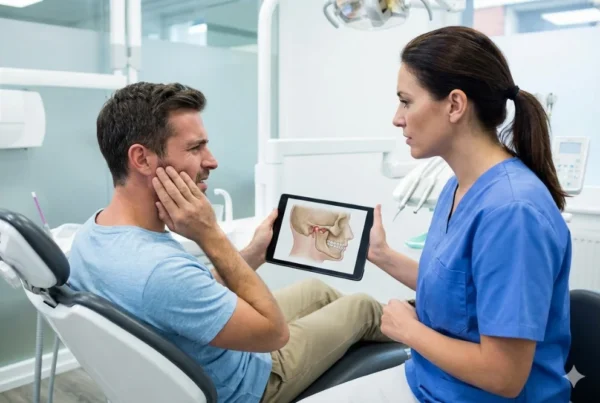
You might be afraid the grinding will break a tooth, or you’re uneasy about a needle in your face. Both worries are fair, and waiting can mean chipped enamel and broken fillings. Morning headaches and sore jaw muscles can build over months, too. Our page on TMJ treatment in Grand Prairie explains the full jaw exam if you want the bigger picture.
What Does a Night Guard Do for Teeth Grinding?
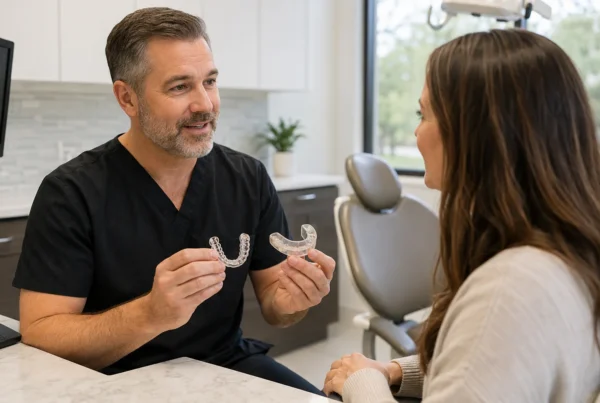
A night guard is a custom acrylic cover worn over your teeth while you sleep, and it absorbs the grinding force. A 2024 review put sleep grinding at 31 percent of people in North America. For most of them, a guard is the simplest first step. It’s made from a mold of your own teeth, so it fits snugly and stays in place all night.
Source: Zieliński and colleagues, Journal of Clinical Medicine, July 2024.
The guard doesn’t stop the brain signal behind grinding, so many people keep grinding while wearing one. What changes is where the force lands, which is now on the acrylic. Dr. Khademazad says a guard may be enough for a grinder with no joint pain, clicking, frequent headaches or limited jaw movement. It also protects crowns, veneers and fillings, which can chip under heavy nightly force.
Why Isn’t Botox Usually the First Step for Grinding?
Botox usually isn’t first because it relaxes the jaw muscles but leaves your teeth uncovered. It’s a botulinum toxin injected into the masseters, the muscles you feel bulge at your jaw when you clench. A 2024 review in Dentistry Journal pooled nine controlled trials with 137 patients on this use. The effect lasts several months, so each round has to be repeated.
Source: Buzatu and colleagues, Dentistry Journal, May 2024.
Side effects were mostly mild and passed with time, including injection site pain in 20 percent of one group. Another trial found smile changes in 15.4 percent of patients. If you speak, sing or present for a living, ask about this risk before you book. Botox for grinding is also off-label, since the FDA approved the drug for other conditions.
A 2025 overview in the journal Toxins examined the published reviews on Botox for grinding in adults. Its authors found weak methods, so no firm answer is possible yet. They also noted oral appliances remain the main treatment with enough support for sleep grinding. For these reasons, Dr. Khademazad starts with an exam and a guard, which you can stop wearing anytime.
Source: Coelho and colleagues, Toxins, May 2025.
Which Signs Point Toward a Night Guard?
Dr. Khademazad looks at 4 signs before choosing a guard: joint pain, clicking, frequent headaches and limited jaw movement. If you have none of these, a standard guard is often enough. A clencher with several of them may need a different appliance, since in his experience a guard can worsen those symptoms. The list below covers the signs worth mentioning at your visit.
- Flat or worn biting surfaces
- Cracked teeth or broken fillings
- Jaw pain or clicking when you chew
- Scalloped edges along the tongue
Bring this list to your visit, plus anything your partner notices while you sleep. Each sign helps your dentist separate simple tooth wear from a jaw joint problem or a sleep problem. Our article on night guard vs TMJ splint explains the second appliance. It’s the right next read if clicking or jaw pain is part of your story.
How Do a Night Guard and Botox Compare?
The table below compares both options on the 4 points patients ask about most, from protection to tradeoffs. Use it to sort out your questions before your first exam. Your bite, jaw joints and health history will decide which option fits you.
| Point | Custom night guard | Botox injections |
| What it targets | Force on the teeth | Jaw muscle strength |
| Protects enamel and dental work | Yes, it covers them | No, teeth stay uncovered |
| Stops the grinding itself | No, it absorbs the force | It may lower muscle force |
| Main tradeoff | Nightly wear and daily cleaning | Possible smile or chewing changes |
Some patients use both, with a guard protecting the teeth while Botox calms severe muscle pain. This pairing usually comes later, if a guard alone fails. Results vary, so expect your plan to change as your dentist learns how your jaw responds.
When Might Botox Make Sense for a Grinder?
Botox may be worth discussing in 3 situations, and each should begin with an exam and a fair trial of a guard. The common thread is muscle pain the guard alone hasn’t settled. Your dentist can then help you decide whether a referral to a trained injector makes sense.
- Muscle pain lasts despite a guard
- Jaw muscles feel enlarged and tender
- Heavy clenching happens during the day
Even then, Botox works best as one part of a plan rather than the whole plan. A guard still protects your teeth while the injection calms the muscle. Before treatment, ask who will give the injection, how often you’ll return and how they’ll track your results.
Is Your Grinding Tied to How You Sleep?
Grinding and sleep apnea often show up together, so a grinding exam should include airway questions. A 2023 study in the Journal of Clinical Sleep Medicine tested 914 adults with sleep apnea in a sleep lab. Nearly half of them, 49.7 percent, also had sleep grinding. So if you snore or wake up tired, mention it at the same visit.
Source: Li and colleagues, Journal of Clinical Sleep Medicine, March 2023.
Sleep apnea is a medical diagnosis, so Dr. Khademazad screens for signs and works with your physician on next steps. Dental clues include worn biting surfaces, frequent fractures and scalloped tongue edges. Botox may quiet the chewing muscles, but it won’t treat a breathing problem sitting underneath them. If a sleep study is the right next step, he can explain the referral and how your dental care fits around it.
Protect Your Teeth While You Find the Cause
Dr. Behrooz Khademazad, DDS, has served Grand Prairie since 1987. About 35 percent of his new patients come after anxiety or a bad experience elsewhere, so he explains each step before it happens. At your first visit he checks your teeth, joints and airway, and you’ll leave knowing which option fits and its cost. Many patients come from Dalworth Park, Mira Lagos and Brookfield North, while others drive in on State Highway 161 near Epic Central Park. The goal is waking up without a sore jaw and keeping your natural teeth strong for years.
Call Grand Prairie Family Dental at 972-988-0900 to book a grinding and jaw evaluation. You can also request an appointment at gentlegrandprairiedentist.com, and the team will check your benefits before your visit. Bring your old guard and any notes about headaches or snoring to the visit.
Questions Patients Ask About Night Guards and Botox
What is the 4-hour rule for Botox?
The 4-hour rule means staying upright for three to four hours after your injections instead of lying down. The Cleveland Clinic guide to Botox aftercare also says to avoid rubbing the area for 12 hours and to skip hard exercise for 24 hours. These steps help limit swelling and bruising, so book a time when you won’t need to nap or work out afterward.
Should a night guard cover all teeth?
Most custom night guards cover every tooth on one arch, so the biting force spreads evenly across the mouth. Front-only guards exist, but without close follow-up they may let back teeth shift. The American Dental Association page on teeth grinding explains why a guard made from your own mold gives the closest, most comfortable fit.
Who isn’t a good candidate for masseter Botox?
Providers generally avoid Botox during pregnancy and breastfeeding, and they ask about blood thinners and any injections in the past four months. The Mayo Clinic overview of Botox injections also lists side effects to watch for. If you have a big event coming up, ask about timing, since full results can take a week or more.
Will insurance pay for Botox for TMJ?
Coverage varies by plan, and many medical and dental plans decline Botox for jaw problems because of its approval status. The National Institute of Dental and Craniofacial Research page on TMD says the FDA hasn’t approved it for TMD. Call your insurer before treatment and ask for the coverage decision in writing.