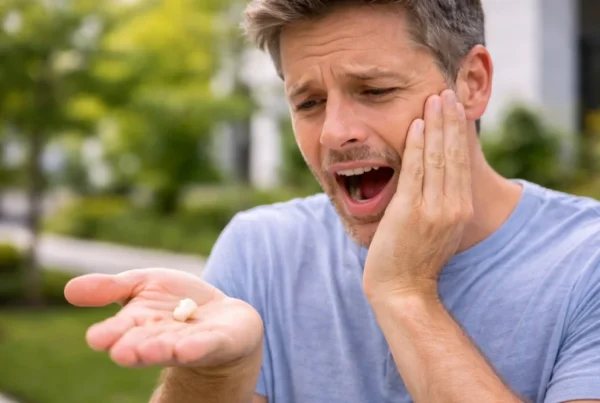


When tooth pain strikes at night or on a weekend the instinct for many people is to head straight to the hospital emergency room. That decision often leads to a long wait, a temporary prescription, and a referral to a dentist anyway. Grand Prairie Family Dental, located in Grand Prairie TX, handles dental emergencies directly under Dr. Behrooz Khademazad, DDS, who has practiced at this location since August 28, 1988 and has guided patients through urgent dental decisions for over 35 years.
The difference between an emergency dentist and a hospital ER comes down to one thing: who can actually fix the problem. Patients from Pioneer Ridge and Dalworth Park who call Grand Prairie Family Dental during a dental emergency get the right answer before they spend hours in a waiting room. Most say the call saved them both time and money.
Why Tooth Problems Often Feel Like Medical Emergencies
Tooth pain is processed by the same nerve pathways as other types of acute pain, which is why a bad toothache can radiate to the jaw, ear, and side of the head and feel like something is seriously wrong. The confined space of the mouth means infection and pressure have nowhere to go, which makes the pain more intense than many patients expect. The American Dental Association identifies untreated dental infections as a genuine health risk precisely because of how quickly they can escalate.
The important distinction is that intense pain does not automatically mean the problem requires hospital care. Most dental emergencies, including abscesses, cracked teeth, and lost restorations, are best resolved by a dentist, not a medical doctor.
What an Emergency Dentist Is Best Equipped to Treat
Emergency dentists are trained to diagnose and treat problems affecting teeth, gums, and supporting structures. They focus on relieving pain while fixing the underlying issue. This usually leads to faster and more complete relief.
Emergency dentists can treat toothaches, infections, broken teeth, lost fillings or crowns, and dental trauma. They have the tools needed to restore or stabilize the tooth. This allows treatment to begin right away instead of delaying care.
When to Call an Emergency Dentist
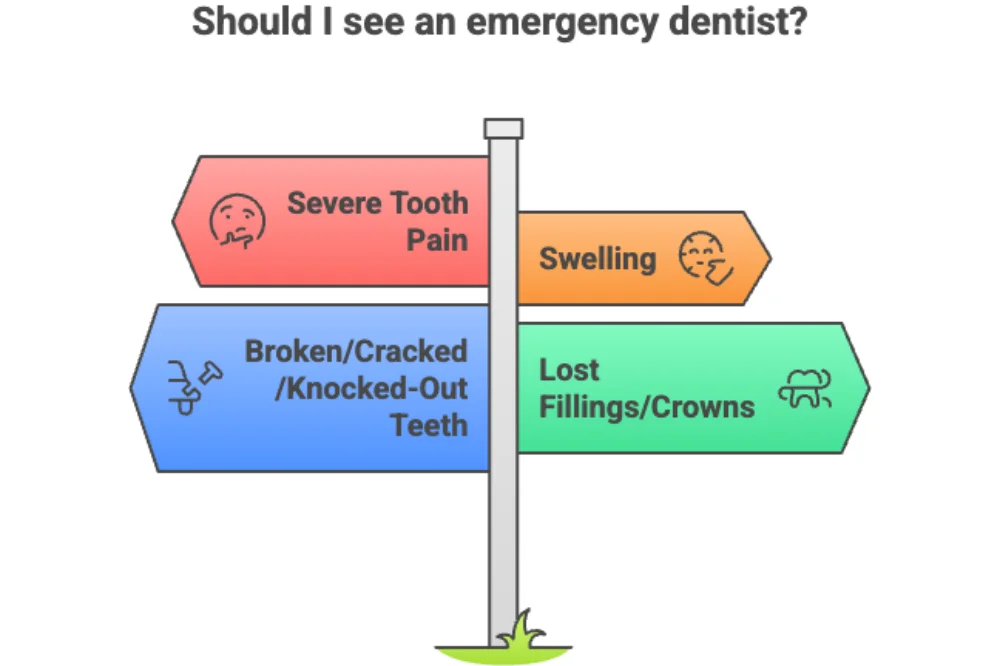
The majority of dental emergencies are best handled by calling a dentist directly. Dr. Khademazad evaluates urgent situations at every call and gets patients in as quickly as possible when the problem requires same-day care. Situations that belong in a dental office include:
- Severe tooth pain from decay, infection, or a cracked tooth
- A dental abscess or swelling localized to the gum or jaw
- A broken, chipped, or knocked-out tooth
- A lost filling or crown causing pain or sensitivity
- Soft tissue injuries inside the mouth that are not bleeding uncontrollably
- A loose or dislodged tooth following minor trauma
Patients from Sheffield Village and Grand Prairie who call the office with these symptoms are triaged over the phone and scheduled for same-day treatment whenever possible. Getting to a dentist quickly for these situations prevents the infection or damage from progressing and almost always leads to faster resolution.
What the Hospital ER Can and Cannot Do for Dental Problems
Hospital emergency rooms are designed to treat life-threatening conditions. They are not equipped to provide dental repairs or restorations. This can surprise patients who expect full treatment.
At the ER, doctors may offer pain medication or antibiotics if needed. However, they usually cannot fix a tooth, replace a crown, or drain a dental abscess properly. Most patients are referred to a dentist afterward.
When to Go Directly to the Hospital ER
There are genuine dental emergencies that require hospital care first. These situations involve risks that go beyond what a dental office is equipped to handle and should not wait for a dental appointment. Go directly to the nearest emergency room if you experience any of the following:
- Facial swelling that is affecting your ability to breathe or swallow
- Uncontrolled bleeding from the mouth that will not stop with pressure
- Serious facial trauma involving a potential broken jaw or facial bones
- A high fever combined with visible spreading swelling or difficulty opening the mouth
- Any dental infection with signs of systemic spread including chills, confusion, or rapid heart rate
Once the hospital has stabilized the situation, dental follow-up is almost always required. Dr. Khademazad works with patients who have been discharged from the ER and need same-day or next-day dental care to address the source of the problem.
Emergency Dentist vs. Hospital ER
Choosing the right place to go during a dental emergency is a decision that affects both your outcome and your bill. Here is how the two options compare across the factors that matter most.
| Situation | Emergency Dentist | Hospital ER |
|---|---|---|
| Severe tooth pain or abscess | Best choice | Temporary pain relief only |
| Broken or knocked-out tooth | Best choice | Cannot treat |
| Lost filling or crown | Best choice | Cannot treat |
| Facial swelling affecting breathing | Not appropriate | Required |
| Uncontrolled bleeding | Not appropriate | Required |
| High fever with spreading infection | Not appropriate | Required |
The bottom line is that if the problem involves a tooth, the emergency dentist is almost always the right call. If the problem involves your airway, uncontrolled bleeding, or a spreading infection with systemic symptoms, go to the ER and follow up with a dentist once you are stabilized.
Why Choosing the Right Care Matters
Going to the wrong place can lead to frustration and added expense. ER visits for dental problems often result in temporary relief only. The underlying issue usually remains untreated.
Dr. Behrooz Khademazad encourages patients to seek dental care when the problem is dental in nature. Proper treatment early often reduces pain faster and prevents complications.
Trusted Guidance During Dental Emergencies
At Grand Prairie Family Dental, patients receive clear guidance during urgent situations. The focus is on relieving pain, addressing the cause, and explaining next steps. Patients are never left guessing where to go.
Dr. Behrooz Khademazad brings decades of experience and patient-first care to every emergency decision. If you are unsure whether to see an emergency dentist or go to the hospital, contact Grand Prairie Family Dental at 972-988-0900. The office is located at 2475 W Pioneer Pkwy, Grand Prairie, Texas 75051.
Grand Prairie Family Dental
2475 W Pioneer Pkwy Grand Prairie, Texas, 75051
Google Reviews: See More Reviews From Grand Prairie Family Dental
View information about local places in our community.
Driving Directions to Our Practice
Frequently Asked Questions
Can the ER fix a toothache?
No. Hospital emergency rooms can provide temporary pain relief through medication and may prescribe antibiotics if an infection is present, but they cannot diagnose the dental cause of the pain, repair a tooth, or treat an abscess properly. Most ER patients with tooth pain are discharged with instructions to follow up with a dentist as soon as possible. Calling an emergency dentist directly almost always leads to faster and more complete resolution.
When should facial swelling be treated at the ER?
Facial swelling from a dental infection that remains localized to the jaw or gum area is typically managed by an emergency dentist. Swelling that moves toward the throat, affects your ability to breathe or swallow, or is accompanied by a high fever and difficulty opening your mouth requires immediate hospital care. Once the hospital stabilizes the situation, dental treatment is still needed to address the source of the infection.
How Much Does an Emergency Dental Visit Cost Compared to the ER?
An emergency dental visit is almost always significantly less expensive than a hospital ER visit for a tooth-related problem. ER visits for dental pain typically result in bills of several hundred to several thousand dollars for an evaluation and temporary medication, with no treatment of the actual dental problem. Most PPO dental insurance plans cover emergency dental exams and procedures at standard rates. Grand Prairie Family Dental verifies your insurance before your appointment and provides a written cost estimate before any treatment begins.
What Should I Do if a Tooth Gets Knocked Out?
Pick the tooth up by the crown, not the root. Rinse it gently with water but do not scrub it. If possible, place it back in the socket and hold it there or keep it in a container of milk. Call Grand Prairie Family Dental immediately. A knocked-out tooth has the best chance of being saved when reimplanted within 30 to 60 minutes of the injury. Do not let time pass before calling.
Does Grand Prairie Family Dental See Emergency Patients the Same Day?
Yes. Dr. Khademazad makes every effort to see emergency patients the same day they call. When you call (972) 988-0900 with an urgent situation the team will triage your symptoms over the phone and get you in as quickly as possible. Patients with severe pain, a knocked-out tooth, or a spreading infection are prioritized for same-day care.