
How long does it take to get used to dentures is a question most people ask because they want reassurance, not perfection. They want to know if what they are feeling is normal and whether it will get easier. For most patients, the adjustment happens gradually over several weeks, with steady improvement along the way.
At Grand Prairie Family Dental, Dr. Behrooz Khademazad has guided patients through this restorative dentistry transition for more than 34 years. He understands that dentures affect daily comfort, confidence, and peace of mind. His role is to provide clear expectations and calm guidance so patients never feel unsure about what comes next.
What Getting Used to Dentures Really Involves
Getting used to dentures is not about forcing yourself to adapt. It is about allowing your mouth and brain to learn new patterns together. Your tongue, cheeks, and jaw must adjust to a different shape and pressure system.
Early sensations often include fullness, mild soreness, or constant awareness of the denture. These feelings are common because your muscles are learning where the denture sits and how it moves. As muscle memory develops, the denture feels less noticeable during everyday activities.
A Realistic Timeline for Denture Adjustment
The first one to two weeks are usually the most uncomfortable. During this phase, sore spots, extra saliva, and speech changes are common. These symptoms do not mean something is wrong, they reflect normal adaptation.
Between weeks three and four, many patients notice meaningful progress. Chewing becomes more controlled, and speaking feels more natural. Small adjustments during this period often bring significant relief.
By two to three months, dentures feel far more natural for most people. Eating and speaking require less effort, and daily wear feels routine. Continued follow-up helps maintain comfort as tissues settle.
Factors That Influence How Quickly You Adjust
Every mouth adapts differently to dentures. Gum shape, bone support, saliva flow, and muscle tone all influence comfort. Overall health and healing ability also play a role.
First-time denture wearers often need more time to adapt. Patients who previously wore dentures may adjust faster because their muscles already know the movement. Immediate dentures can feel different at first because the gums change during healing.
Common Challenges During the First Few Weeks
The early adjustment period can feel unpredictable. Some days feel comfortable, while others feel frustrating. This pattern is normal and temporary.
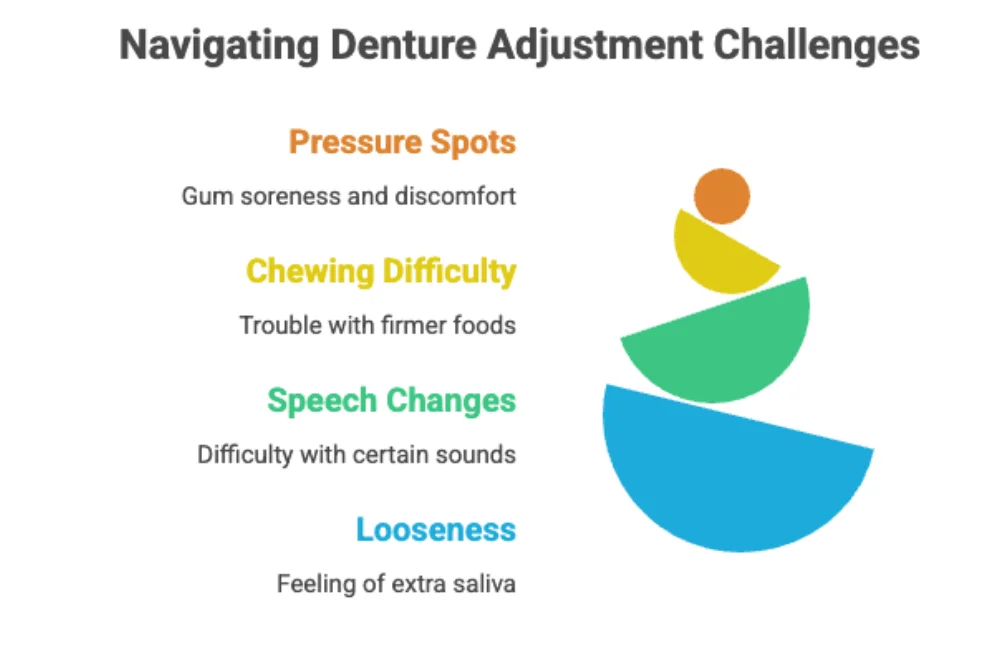
Here are common challenges many new denture wearers notice:
- Pressure spots or gum soreness
- Difficulty chewing firmer foods
- Speech changes with certain sounds
- A feeling of looseness or extra saliva
Many patients experience soreness, chewing difficulty, or speech changes early on. These challenges usually improve with proper adjustments and daily practice. Staying in communication with your dentist shortens this phase.
Daily Habits That Make Dentures More Comfortable
Daily habits strongly influence how quickly dentures feel natural. Small, consistent routines help your mouth adapt without irritation. These habits also help identify when an adjustment is needed.
Helpful habits include starting with soft foods and small bites. Chewing evenly on both sides improves balance and control. Reading aloud helps retrain speech muscles. Using denture adhesive only as directed prevents reliance issues. Ongoing pain or irritation should prompt a call to your dentist. Discomfort is a signal, not something to push through.
Normal Soreness Versus Fit Problems
Mild tenderness is common during the early days of wearing dentures, especially as your gums adapt to new pressure points. This soreness usually feels dull or generalized rather than sharp. When the tenderness improves after small adjustments or short breaks from wear, it is typically part of the normal adjustment process.
Fit problems feel noticeably different from normal soreness and tend to get worse instead of better. Sharp pain, repeated sore spots, ulcers, rocking, or clicking are signs the denture is not distributing pressure correctly. These issues do not resolve on their own and usually mean the denture needs professional adjustment to prevent tissue damage.
For patients in areas like Westchester or Mira Lagos, timely care makes a meaningful difference during this stage. Small adjustments can quickly relieve pressure and restore comfort. Waiting too long often allows minor fit problems to turn into prolonged irritation or injury.
Eating With Dentures Over Time
Eating with dentures takes patience because your mouth and brain are learning a new way to work together. Dentures do not anchor the same way natural teeth do, so your brain must relearn how much pressure to apply while chewing. That learning curve is why food can feel awkward or unpredictable at first, even when the denture fit is correct.
Soft foods that cut easily work best during the early weeks, along with small bites and slow chewing. Chewing evenly on both sides improves balance and helps prevent tipping or sore spots. Over time, more textures become comfortable, though some foods may always require extra care, which is completely normal.
Speaking Clearly With Dentures
Speech changes happen because dentures slightly alter the space where your tongue moves. Early on, your tongue may bump into new edges or surfaces, which can affect certain sounds. This is normal and does not mean something is wrong with your dentures, it simply means your muscles are relearning coordination.
Reading aloud, practicing conversation, and repeating tricky words help retrain muscle memory faster than silence. Most patients notice steady improvement within a few weeks as their tongue adapts. If speech still feels difficult after that point, small adjustments to the denture shape or position can make a meaningful difference, because dentures should support communication, not interfere with it.
Immediate Dentures Compared to Conventional Dentures
Immediate dentures are placed on the same day teeth are removed, which allows patients to leave the office with a full smile. This can be emotionally reassuring and helps maintain appearance during healing. However, because the gums and bone change shape as they heal, immediate dentures often require multiple adjustments or relines to maintain comfort and stability.
Conventional dentures are placed after the gums have healed, which usually allows for a more predictable and stable fit from the start. Patients who choose this option may spend time without teeth, but often experience fewer early fit changes. Both approaches can lead to successful long-term outcomes when planned carefully and supported with follow-up care.
Denture Adjustment Comparison
Understanding how different denture situations affect adjustment helps reduce uncertainty. Each denture type follows a slightly different path. Knowing what to expect makes the process less stressful.
| Denture Type | Early Experience | Follow-Up Needs |
| Immediate dentures | Looseness during healing | Relines as gums change |
| New full dentures | Speech and chewing learning | Multiple adjustments |
| Partial dentures | Faster adaptation | Minor bite tuning |
This comparison helps set realistic expectations. Progress should feel steady over time rather than instant. Regular follow-up visits keep adaptation on track and prevent setbacks.
When Denture Issues Need Prompt Attention
Most denture concerns are not true emergencies, but they still deserve timely care. Minor soreness, looseness, or rubbing often means an adjustment is needed rather than urgent treatment. Knowing the difference helps prevent unnecessary stress while still protecting your oral health.
Certain symptoms should never be ignored because they can signal a bigger problem. Swelling, fever, open sores, or pain that interferes with eating or sleeping all require evaluation. If a denture cracks or breaks, it should not be worn until it is checked, since early care helps prevent tissue injury and further complications.
Taking the Next Step With Dentures
Getting used to dentures should never feel like trial and error. The real challenge is not the dentures themselves, it is not knowing what is normal and what needs attention. When expectations are clear and support is consistent, the adjustment process becomes calmer and far more manageable.
At Grand Prairie Family Dental, Dr. Behrooz Khademazad serves as a steady guide through every stage of denture adjustment. With decades of experience, he helps patients recognize progress, address discomfort early, and regain confidence at their own pace. If you are ready for clear answers and steady support, call 972-988-0900 to schedule a denture consultation or adjustment.
Grand Prairie Family Dental
2475 W Pioneer Pkwy Grand Prairie, Texas, 75051
Google Reviews: See More Reviews From Grand Prairie Family Dental
View information about local places in our community.
Driving Directions to Our Practice
Frequently Asked Questions
How long does it take to get used to dentures for eating?
Most patients notice improvement within two to four weeks, but full confidence with eating usually takes longer. Early success depends on choosing soft foods, taking small bites, and chewing evenly on both sides so the denture stays balanced. As your brain relearns pressure and coordination, meals begin to feel more natural, and the effort required to chew decreases over time.
Is it normal for dentures to feel loose at first?
Mild looseness can be normal early on, especially with new or immediate dentures, because your gums and muscles are still adapting. Healing tissues change shape, and your mouth needs time to learn how to hold the denture in place during speaking and eating. However, dentures should not rock, slip, or cause pain, so ongoing looseness is a sign that an adjustment is needed.
How many adjustments are normal with new dentures?
Several adjustments in the first month are common and expected for new denture wearers. As your gums heal and respond to pressure, small sore spots or bite changes often appear and need correction. Addressing these early helps prevent ulcers, improves comfort, and leads to a more stable long-term fit.
When should I call a dentist about denture pain?
Mild tenderness during the adjustment period can be normal, but sharp pain, sores, swelling, or worsening discomfort are not. Pain that interferes with eating, speaking, or sleeping should always be evaluated, because it often means the denture is placing pressure in the wrong area. Calling early usually allows for a simple adjustment instead of prolonged irritation.