
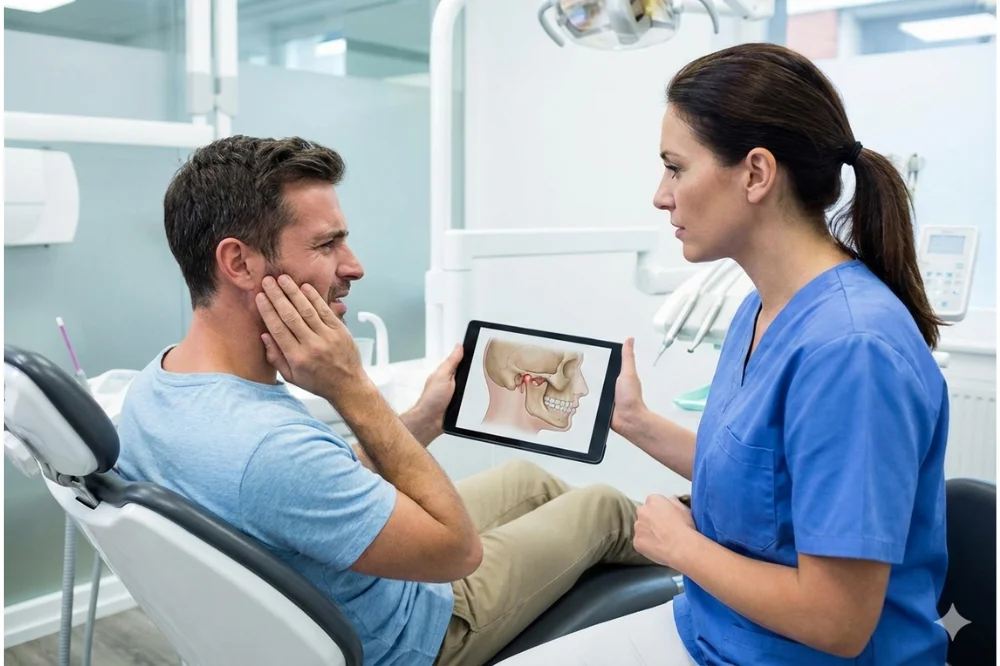
Jaw pain, clicking, headaches, or earaches that do not fully make sense may all point back to the same source: TMJ disorder. Many people in Grand Prairie feel these symptoms separately and never realize they could be connected. When the jaw joint is under strain, the discomfort can spread beyond the jaw and affect daily life in subtle but frustrating ways.
At Grand Prairie Family Dental, Dr. Behrooz Khademazad has spent more than three decades helping patients connect those dots. His experience in orthodontics, restorative dentistry, and conservative TMJ care allows him to evaluate jaw pain from multiple angles rather than focusing on one isolated symptom. Patients from Westchester, Dalworth Park, Mira Lagos, Lakewood Grand Prairie, and surrounding neighborhoods often say their biggest relief came from finally understanding why their symptoms were happening.
Core TMJ Symptoms at a Glance
Most TMJ disorder cases share a recognizable pattern of symptoms that affect the jaw, head, and surrounding muscles. While not everyone experiences every sign, there is usually a consistent cluster rather than a single isolated issue. Seeing these symptoms grouped together often helps patients realize their discomfort may be connected to the jaw joint.
Common TMJ disorder symptoms include:
- Jaw pain or tenderness, especially in front of the ear
- Clicking, popping, or grinding sounds during movement
- Difficulty opening or closing the mouth fully
- Headaches that begin near the temples
- Facial aching that worsens with chewing
- Ear fullness or pressure without infection
You may experience only a few of these signs, or you may notice several at once. The important detail is that they tend to repeat in patterns instead of appearing randomly. If multiple items on this list feel familiar, it is reasonable to consider whether your jaw joint could be involved.
Jaw Pain and Joint Tenderness
Jaw pain is often the symptom people notice first. It usually feels like a dull ache or tenderness just in front of the ear or along the jawline. The discomfort may increase while chewing, speaking for long periods, or waking up after a night of clenching.
Some patients describe their jaw as feeling tired or heavy after meals. Others notice soreness that shifts from one side to the other over time. When jaw pain keeps returning, it is rarely something that simply disappears on its own without addressing the underlying strain.
Clicking, Popping, and Jaw Locking
Noisy jaw joints are common in TMJ disorder. Clicking or popping may happen when the cushioning disc inside the joint moves slightly out of alignment during opening and closing. At first, the sound may not hurt, which is why many people ignore it.
Over time, clicking combined with stiffness or pain becomes more concerning. Some patients experience brief episodes where the jaw feels stuck or does not open fully. Repeated locking episodes, whether open or closed, should be evaluated rather than forced.
Headaches and Facial Pain
TMJ disorder frequently shows up as headaches rather than obvious jaw pain, which is why many people do not immediately connect the two. These headaches often begin near the temples or just in front of the ears and may radiate to the forehead or behind the eyes. Patients commonly describe the discomfort as feeling like tension headaches, and some even say it mimics migraines they have had in the past.
Facial pain can also feel confusing because it does not always stay in one place. It may present as pressure along the cheeks, aching in the upper jaw, or soreness that seems similar to sinus discomfort. Since the jaw muscles and facial nerves share pathways, irritation in the joint can easily spread beyond the jaw itself.
The pattern is what matters most. When headaches repeatedly occur alongside jaw clicking, clenching, or stiffness, the relationship becomes easier to recognize. Looking at those symptoms together, instead of separately, often reveals that the jaw joint is contributing more than you might expect.

Ear, Neck, and Shoulder Symptoms
The jaw joint sits very close to the ear canal, which explains why TMJ disorder often feels like an ear problem. Patients commonly report earaches, pressure, or ringing even when ear exams show no infection. This overlap can make diagnosis confusing without a thorough evaluation.
Neck and shoulder tension frequently accompany jaw symptoms as well. Jaw muscles and neck muscles work together, so strain in one area affects the other. When ear and neck discomfort change with chewing or clenching, TMJ disorder becomes a more likely explanation.
Difficulty Chewing, Talking, and Daily Impact
TMJ symptoms often become most noticeable during ordinary daily activities. What begins as mild discomfort can slowly influence how you eat, speak, and even socialize. When normal tasks start to feel effortful, it is usually a sign the joint is under strain.
Functional symptoms of TMJ disorder often include:
- Pain or fatigue while chewing, especially harder foods
- Favoring one side of the mouth while eating
- Discomfort during long conversations or phone calls
- Jaw stiffness when yawning or laughing widely
- A bite that suddenly feels uneven or unstable
Over time, these adjustments can quietly limit your routine. You might avoid certain foods or shorten conversations without realizing why. Recognizing these changes helps you understand that TMJ disorder affects function, not just pain levels.
TMJ Symptoms vs Other Common Conditions
Many TMJ symptoms overlap with other medical concerns, which can create uncertainty. A comparison can help you see where patterns differ without encouraging self-diagnosis. While this guide does not replace medical care, it may help you recognize when the jaw is likely involved.
| Symptom Pattern | TMJ Disorder | Ear Infection | Sinus Pressure | Tooth Infection | Tension Headache |
| Jaw clicking or popping | Common | Rare | Rare | Rare | Rare |
| Pain worse with chewing | Common | Sometimes | Sometimes | Common | Rare |
| Ear fullness with normal exam | Common | Unlikely | Possible | Rare | Rare |
| Fever or drainage | Rare | Common | Possible | Possible | Rare |
| Limited jaw opening | Common | Rare | Rare | Rare | Rare |
If your symptoms consistently change with jaw movement, TMJ disorder becomes more likely. If fever, swelling, or severe systemic symptoms appear, medical care may be urgent. When in doubt, an evaluation provides clarity rather than guesswork.
When to See a TMJ Dentist in Grand Prairie
Jaw pain lasting more than a few weeks should not be dismissed. Frequent headaches, locking, or difficulty chewing suggest that the joint may be under strain. Grinding and visible tooth wear add important clues that the stress may be ongoing.
At Grand Prairie Family Dental, Dr. Behrooz Khademazad approaches TMJ disorder with experience and steady guidance built over three decades in this community. You deserve clear answers and a plan that feels measured and thoughtful. If you live near Cedar Ridge Estates, Sheffield, or Mira Lagos and recognize these patterns, scheduling a TMJ evaluation is a supportive next step toward relief.
Frequently Asked Questions
What are common symptoms of TMJ disorder?
Common symptoms include jaw pain, tenderness near the ear, clicking or popping, limited jaw opening, headaches, and facial aching. Why it matters is that these symptoms often appear together and may be misinterpreted as separate problems. Instead of focusing on one symptom alone, consider whether a pattern is present, because repeated jaw-related discomfort often signals joint strain that benefits from evaluation.
Can TMJ disorder cause headaches?
Yes, TMJ disorder can contribute to tension-type headaches or migraine-like discomfort that begins near the jaw and temples. Why it matters is that treating headaches alone may not address the underlying joint stress. Instead of assuming stress is the only cause, consider whether jaw clenching or clicking accompanies your headaches, because addressing muscle tension often reduces head pain.
Can TMJ disorder cause ear pain?
TMJ disorder can create ear pain, fullness, or ringing because the jaw joint sits very close to the ear canal. Why it matters is that many patients undergo repeated ear treatments without relief when the jaw is the true source. Instead of focusing only on the ear, notice whether discomfort changes with chewing or jaw movement, because that pattern often points to TMJ involvement.
When should I see a dentist for TMJ symptoms?
You should seek evaluation if jaw pain, clicking, headaches, or locking episodes continue for more than a few weeks. Why it matters is that early care often prevents symptoms from becoming more severe. Instead of waiting for the discomfort to worsen, schedule an exam when patterns repeat, because a conservative approach is most effective when started early.
Related Articles
Related Posts