Reviewed by Dr. Behrooz Khademazad, DDS. Updated October 12, 2026.
Straighter Teeth as an Adult, With a Clear Plan and Price Up Front
Braces for adults in Grand Prairie come in three main types, each with its own timeline and cost. Dr. Behrooz Khademazad, DDS, has performed orthodontics for over 30 years. He has cared for Grand Prairie families since 1988 as the only dentist at Grand Prairie Family Dental. Below, you will see which type fits, how long it takes, and what it costs.
Many adults put off straight teeth for years. They fear looking awkward at work, or paying for treatment long after the braces come off. Some worry a dentist will push the priciest option first. Waiting has a cost too, since crowded teeth trap plaque and a bad bite wears enamel down over time. You can compare every option for braces in Grand Prairie and decide at your own pace.
Is It Worth Getting Braces as an Adult?
For most adults, yes. Straight teeth are easier to clean, which lowers your risk of cavities and gum disease. Braces can also ease jaw strain from a bad bite. The American Association of Orthodontists reports 1 in 3 orthodontic patients is now an adult. Healthy teeth and gums matter more than your age.
Adults often notice the payoff in daily life first. Food stops catching between overlapped teeth, and flossing takes less time each night. A balanced bite also spreads chewing force evenly, which helps protect fillings and crowns from breaking early.
Source: American Association of Orthodontists, Adult Orthodontics, updated September 30, 2026.
What Problems Can Braces Fix for Adults?
Braces fix most alignment and bite problems in adults, from mild crowding to a deep overbite. Worn or chipped front teeth often trace back to a bad bite. Dr. Khademazad checks your gums and bone first, since healthy support lets teeth move safely and stay put. Here are the problems adults bring us most often.
- Crowded, overlapping teeth trapping food and plaque
- Gaps between teeth, including space left after an old extraction
- An overbite, underbite, or crossbite straining your jaw
- Teeth shifting after you stopped wearing a childhood retainer
- Uneven wear along the edges of your front teeth
Some cases need more than braces alone. A missing tooth may need an implant or bridge once the other teeth move into place. Dr. Khademazad plans each step and gives you the full cost first.
What Type of Braces Are Best for Adults?
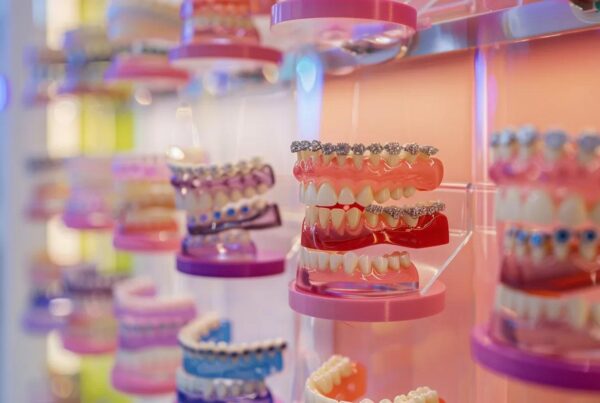
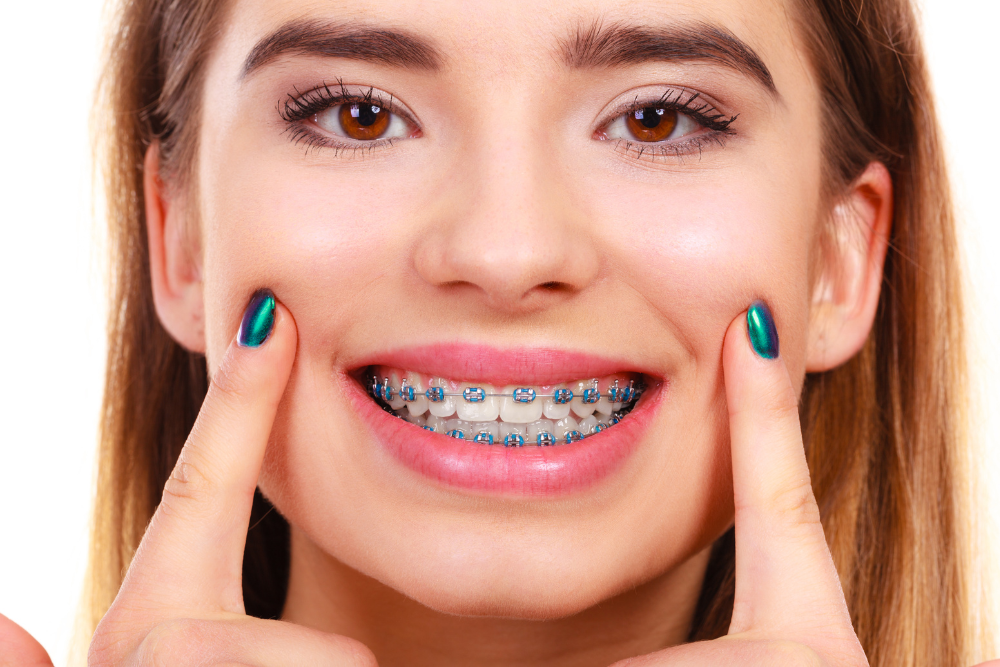
The best type depends on how far your teeth need to move. Metal braces handle the most complex cases. Ceramic braces work the same way with tooth-colored brackets, so they show less. Clear aligners like Invisalign suit milder cases. Dr. Khademazad reviews your bite and x-rays before he recommends one.
| Type | How it looks | Best for | Daily care |
|---|---|---|---|
| Metal braces | Silver brackets and a thin wire | Complex crowding and bite problems | Brush around brackets, skip hard and sticky foods |
| Ceramic braces | Tooth-colored brackets | Complex cases where looks matter at work | Same as metal, brackets chip a little more easily |
| Clear aligners | Clear trays you remove to eat | Mild to moderate crowding and gaps | Wear about 20 to 22 hours a day |
Every type works when you follow its care routine. Aligners only work if you wear them most of the day, so they suit adults who keep habits well. A full exam with x-rays shows which option fits your teeth and your budget.

How Long Do Adults Wear Braces?
Most adults wear braces for 18 months to 3 years. Mild crowding finishes near the low end, while moving the bite can take the full 3 years. Adult bone is denser, so teeth move a little slower. You visit every 4 to 8 weeks for an adjustment, and most visits take about 20 minutes.
Your timeline depends on three things your dentist can measure. The first is how far each tooth needs to travel to reach its new spot. The second is whether your jaws need to meet differently. The third is how well you keep up with visits and with rubber bands, if your plan uses them.
Dr. Khademazad gives you an estimated finish date at the start. He updates it at each visit. Office hours run until 7 p.m. on Thursdays, which helps if you work during the day.
How Much Do Braces for Adults Cost?
Adult braces in Grand Prairie typically cost $3,000 to $7,000 for full treatment. Metal braces sit at the low end. Ceramic braces and clear aligners cost more, and complex or long cases sit near the top. You see the full cost before you decide.
Ask for a written quote before you start. Check whether it includes adjustment visits and retainers, since some offices bill those separately. At our office, Dr. Khademazad walks through the full cost and your payment options before any treatment begins.
Are Adult Braces Covered by Insurance?
Sometimes, though often only in part. Many dental plans cover orthodontics for children and teens only. Plans with adult coverage usually cap it at a lifetime maximum, commonly $1,000 to $2,000. Our team checks your benefits before treatment starts. An FSA, an HSA, or a payment plan can cover the rest.
Look for three items in your plan: the orthodontic benefit, any age limit, and the lifetime maximum. The maximum pays out once, even if you switch offices. New plans often carry a waiting period before orthodontic benefits begin, so check your start date as well.
If insurance covers only part, you can spread the rest out. We work with Healthcare Finance Direct, CareCredit, Cherry, Sunbit, and Alphaeon, plus in-house Kleer membership plans. Compare each of these dental financing options in Grand Prairie before you commit.
How Do You Keep Your Teeth Healthy With Braces?
Brush for 2 minutes after every meal and clean between your teeth each night while you wear braces. Plaque left around brackets can leave white spots on your enamel. Keep every regular cleaning on schedule. These habits protect your teeth from the first week of treatment to the last.
- Use a floss threader or a water flosser to clean under the wire
- Skip hard foods like ice, nuts, and hard candy
- Skip sticky foods like caramel and chewing gum
- Rinse with water after coffee, tea, or soda when you cannot brush
- Keep every cleaning and adjustment visit on the calendar
Here, your braces, cleanings, and fillings all happen in one office under one dentist. Dr. Khademazad sees your teeth at every visit, so he can catch early decay around a bracket before it spreads. You never have to juggle two offices, two sets of records.
Straight Teeth, a Clear Price, and One Dentist Who Knows Your Mouth
Dr. Behrooz Khademazad has practiced in Grand Prairie since 1987. He has performed orthodontics for over 30 years, from simple spacing to complex bites. Adults come from Mira Lagos, Westchester, and the Lone Star Park area to our office on Pioneer Parkway. Each gets a staged plan and the same dentist at every visit. Results vary by case, and he will tell you honestly what braces can and cannot do for you.
Call 972-988-0900 to book your braces consult and get your questions answered. You can also request a visit at gentlegrandprairiedentist.com, and our team will check your insurance before you come in. You will leave the first visit knowing your options, your timeline, and your cost.
What Else Do Adults Ask About Braces?
Is 40 too old for braces?
No, 40 is not too old. Cleveland Clinic notes there is no age limit on braces, though your gums need to be stable first. Past gum disease does not rule you out. Braces may still work once your gums are healthy and holding steady. Dr. Khademazad checks your gum and bone support at the first exam, so you know where you stand.
Do braces hurt more as an adult?
Braces can feel sore at any age, and adults usually describe a dull ache rather than a sharp pain. Soreness usually lasts 2 to 4 days after placement and after each adjustment. The American Dental Association says today’s braces are more comfortable than ever, thanks to gentler wires. Soft foods and over-the-counter pain relievers help in the first few days. Wax covers any bracket rubbing your cheek.
How can adults fix an overbite?
Most adults fix an overbite with braces or clear aligners, sometimes with small rubber bands. Dr. Khademazad measures your bite and takes x-rays to see whether your teeth or your jaw cause the overbite. According to MedlinePlus, surgery to reshape the jaw is needed only in rare cases. The cause decides which option will work for you. He walks you through each choice and its cost before you pick one.
How do braces straighten teeth?
Braces straighten teeth by putting gentle, steady pressure on each tooth through brackets and a wire. Over months, the pressure guides each tooth into its new position. The American Association of Orthodontists explains successful treatment takes pressure, time, and cooperation from the patient. Each adjustment visit fine-tunes the wire to keep your teeth moving. A retainer holds them in place afterward.